D&D Character Creation
Finding the "Why"
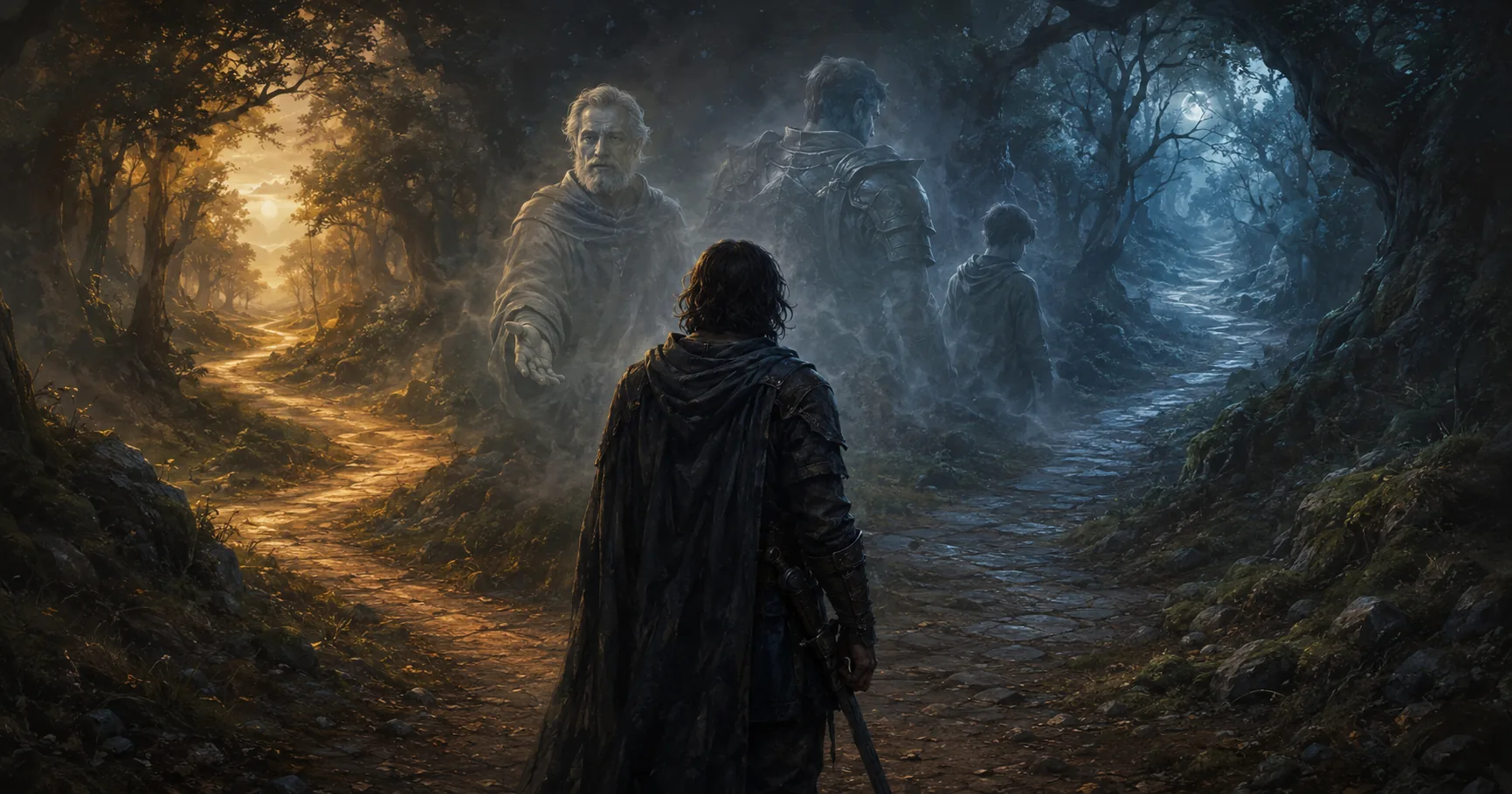
Starting a new campaign is typically filled with excitement, anxiety, and sometimes a sense of urgency. Whether you are a player or GM the creative juices are flowing (hopefully) and there are so many possibilities to explore! A new world, a new side of the same world, a new time period, a new theme, a new character concept, a new class or subclass… The next story is ready to begin its first chapter.
When I get the chance to be a player I tend to start with mechanics and backwards engineer why someone would be that thing, choose those specific spells, where they learned that language and why, or how they got proficiency with a set of tools. For me it is a two-fold choice because I start with something that I will probably enjoy playing from a mechanical standpoint and also it is a creative exercise to figure out how this person came to acquire this particular set of skills. It has become a bit of a creative exercise for me when the opportunity presents itself, it gives me enough restriction to have direction but enough freedom to make unique creative choices.
One of my favorite past characters who I have since retired was named Dreali, an Eladrin warlock. I started with the build based on being Eladrin first because I really liked that their season informed their personality. Then I saw they get a once per day Fey Step, so what could use a free extra spell everyday? Warlock! They have really limited spells so high charisma… because the party needs a face so that works well for the party composition too and the DM really liked the long term implications of having a slow-burn warlock story. The base of the build was set so then the character development was next, why would there be an Eladrin warlock randomly on the material plane? Fey love to play tricks and Dreali was not going to be an exception to this, he probably tried to get one over on a noble in the summer or winter court. Knowing that Fey nobles would likely be out for his head what better place to lay low for a while to buy some time than another plane of existence? From this point I decided to justify the pact with the Great Old One to planeshift in order to spare his life for the immediate need. This tells us he is impulsive and informs how he typically handles situations as a baseline for the character at the start of the story. Solid framework, he is impulsive, fearful, playful and even cavalier when he thinks he can get away with it. As the campaign went on he grew from continually making similar mistakes, started being more cautious as time went on, eventually learning to confront his fear and own up to his mistakes.
In my experience most players don’t put as much thought into the narrative side of things as the mechanical which is one of the reasons I like walking through the process with newer players especially but occasionally players that I know and trust as well because I can usually find something that I can learn from their process as well.
As a GM you can walk with character creation with them, giving guidance on everything from the mechanical side and making sure they will have a solid learning experience and ideally a lot of fun with their first PC. Some tables will leave it at that and let the character’s voice develop organically over time, assuming you aren’t just crawling through dungeons back to back to back, solo-leveling style.
My games tend to have more emphasis on roleplay and narrative character progression than strict min-max number crunching gameplay, since I put more emphasis on getting to the core of the character. Character creation usually revolves around asking a player about what their character’s hopes and dreams are, what their flaws are, interesting (or boring) eccentricities they have. Things like, “Why would your character choose the dangerous life of adventure?” and “When they fulfill their immediate goal (if they have one) do they plan to retire? If so, what does that look like and why?” “What is a hobby or down-time activity they have?”. Very generic starting points to get the wheels turning before we actually get together to get into specifics.
One example when I took over the group I am currently playing on a regular basis with from another GM: There is a player who typically would play one note joke characters. Which is totally fine because most of their experience with the game has been short 3-4 game arcs and then moving on to the next thing. I wanted to run a long term campaign where there was a good chance the player character would be played for a fairly long period of time so I needed to make sure they understood that and wouldn’t get tired of the character 6 months in. I sent everyone a few questions about their characters inner motives, fears, goals, background in relation to the setting, etc. and when we sat down to go through backstory and character specifics, I asked some questions about who they were and why.
Here is why I like going through the process. The character’s main goal was to take care of the cause of the strange murmurs around town and to be left to their own devices in the woods, no specific emotional ties to the area they lived, no family nearby. In my mind, that’s not a long term character and from a pragmatic standpoint they have no reason to go so far to even handle whatever odd things are happening around town. I said “You are already a ranger with above average human skills, you can accomplish your main goal by simply leaving and setting up somewhere else and live off the land.” They replied and in that moment realized that I gave out homework and we were checking it together in real time and said “I think I have some more work to do.” That’s when the conversation and perspective fundamentally changed; Instead of asking what their character wants, I followed up with: what happened before we meet them in session one that made risking their life feel like the only option left? Actors and writers have something they use for this. Sometimes call it’s a wound, sometimes it’s called a ghost, the past event a character is still carrying that shapes everything they do now, whether they realize it or not. Ask for the want and you get a goal. Ask for the ghost and you get a more full bodied character.
Ultimately, from a roleplay perspective, what they choose for their goal to be doesn’t matter as long as they understand WHY. The why is the most interesting part of any character. You can have a great number of flaws and from all outward appearances be actively working toward something that is objectively evil but if there is a reasonable justification for it your actions then you have a great story to tell.
My go-to example of this is Magneto, a very recognizable character in fiction, his “why” is pretty compelling and arguably justify his actions to a great degree. His motivations are grounded in the reality that people had taken away freedom, autonomy, and committed numerous atrocities to his family, friends, and others. He saw people try to do things politely in civil fashion but that restraint allowed for more suffering. From his viewpoint history was repeating itself so stopping it by any means necessary was ultimately the best course of action.
That’s his ghost, the atrocities he survived and watched happen to everyone he loved. It produces his want, stopping the cycle by any means necessary, and it produces something else too: the belief his ghost left him with, that restraint only buys time for the next atrocity, that civility is a luxury the persecuted can’t afford. You don’t have to share that belief to understand why he holds it. That’s what makes him a nuanced character instead of a big bad evil guy.
Not every player is going to hand you total buy-in right off the bat especially if this is the first time you are playing together, or even if you have known each other for years and that’s not a failure on their part. Some people build character through play, not through introspection before the dice even hit the table, and pushing too hard for a fully formed backstory before session one can just as easily make someone who is naturally introverted or new to roleplay pull back further. If a player draws a blank when you ask what happened to them, don’t turn it into homework. Ask something smaller. Who do they trust and why. What’s one thing they’d never do, even to survive. You’re not always going to get the ghost on the first pass, and sometimes it only shows up two arcs in, mid-session, when a moment forces the character to actually reveal it. That’s fine too. I’ve seen plenty of players find a character at the table when actually confronted with a decision. The question doesn’t stop mattering just because the answer takes longer to arrive.
Wherever you start, the destination is the same. As a player, I start with the mechanics and work backward until I know why this person picked up this particular set of skills. As a GM, I start with the questions and work toward the mechanics that let a player live out the answer. Both roads are looking for the same thing: not what the character wants, but what happened to them that makes the want make sense.
So the next time you roll up a character, or sit down to help someone else with theirs, don’t stop at the goal. Ask what baggage they’re carrying. It might start off looking like a simple explorer’s pack, but down the road you find out it’s a bag of holding, full of things they didn’t know to look for. Ask it early, ask it more than once, and be patient if the answer takes a few sessions to show up. You’ll end up with a character worth playing for the long haul, and if you’re the GM, a pile of plot hooks you didn’t have to invent yourself.